
How to do 3 double crochet cluster stitch
Excited to share this week’s new crochet stitch with you. Today, the aim is to learn how to do 3 double crochet cluster stitch. This is a beautiful stitch that can be mastered after a few attempts and can be incorporated into many projects, either on its own or in combination with other projects.
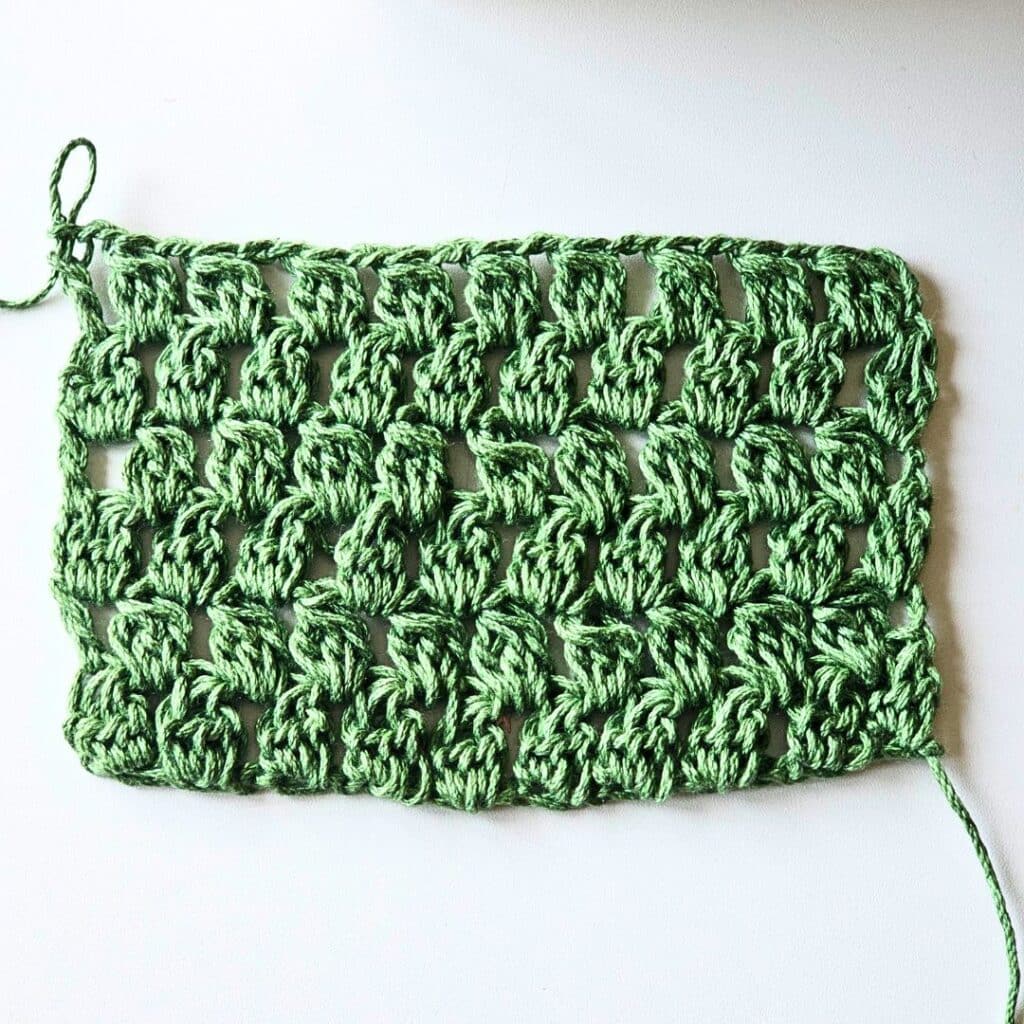
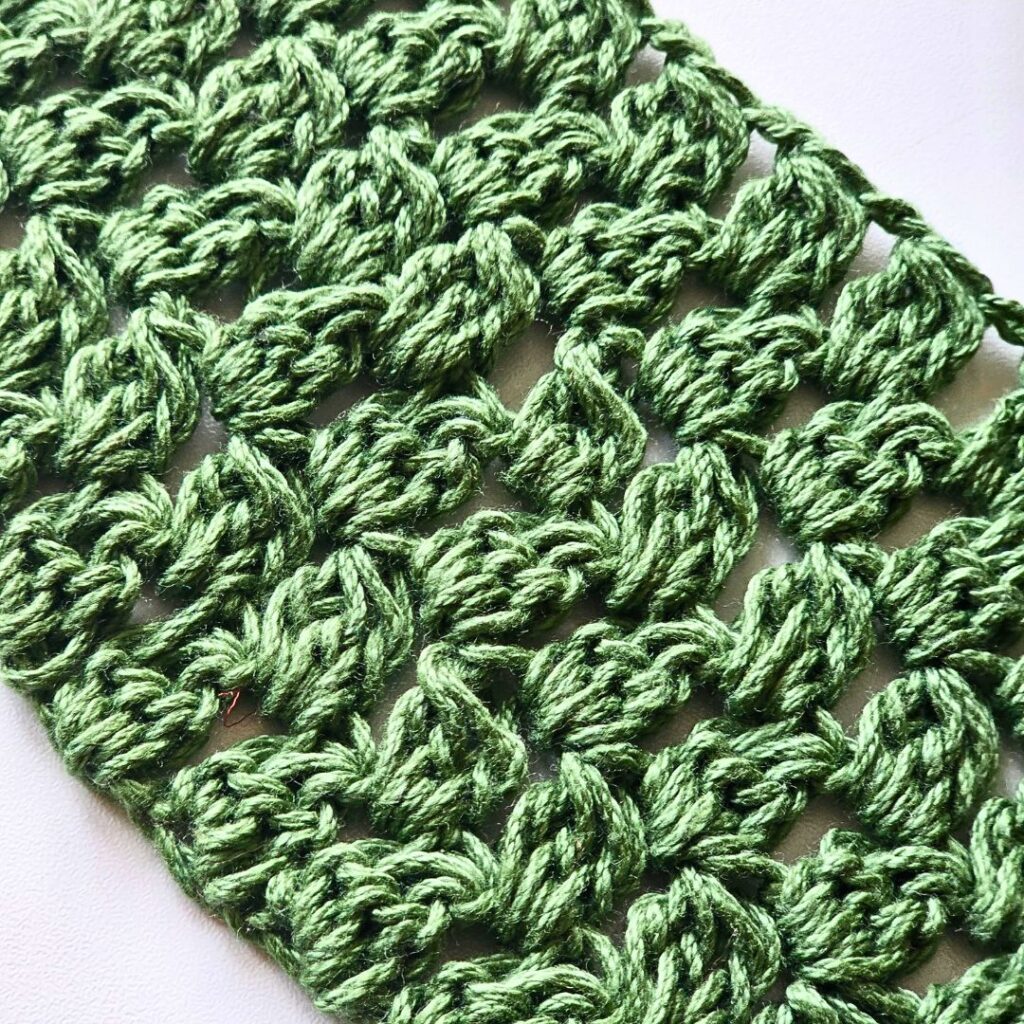
A 3 double crochet cluster, written as 3 dc cl, is made by working three double crochets into the same stitch or space but only partially completing each one.
The final yarn over is pulled through all loops on the hook at once, binding the stitches together at the top and creating a slightly raised puffed group.
This makes the fabric denser than simple double crochet stitches, and the spaces created by the chain stitches in between clusters allow for a nice rhythm of texture and openness.

It is a beginner-friendly stitch and a great introduction to cluster-style crochet stitches.
Materials Needed for crochet cluster stitch
To practice this stitch, you’ll need some smooth yarn (a medium weight yarn like worsted is best for beginners because it shows stitch definition clearly)
A crochet hook size that matches your yarn label
Scissors to trim your work
A tapestry needle to weave in ends.
If you are just learning, you may also find a stitch marker helpful to keep track of turning chains or row ends.
Stitch Abbreviations and Notes
For this tutorial, the abbreviations you need to know are:
ch = chain
dc = double crochet
3 dc cl = 3 double crochet cluster.
The stitch is worked across a foundation chain that is a multiple of 2.
The turning chain counts as a double crochet plus a chain 1 in subsequent rows.
Always make sure to skip the chain spaces between clusters as instructed, because this creates the neat open spaces where you will place your following clusters in the following rows.
How to do 3 double crochet cluster stitch
Base row
Chain a multiple of 2
Row 1:
Step 1: Yarn over, insert hook into the 3rd ch from the hook
Step 2: Yarn over, bring up a loop (3 loops on hook)

Step 3: Yarn over, pull through 2 loops (2 loops on hook)
Step 4: Yarn over, insert hook into the same chain space
Step 5: Yarn over, bring up a loop (4 loops on hook)

Step 6: Yarn over, pull through 2 loops (3 loops on hook)
Step 7: Yarn over, insert hook into the same stitch
Step 8: Yarn over, bring up a loop (5 loops on hook)
Step 9: Yarn over, pull through 2 loops (4 loops on hook)
Step 10: Yarn over, pull through 4 loops (1 loop on hook).
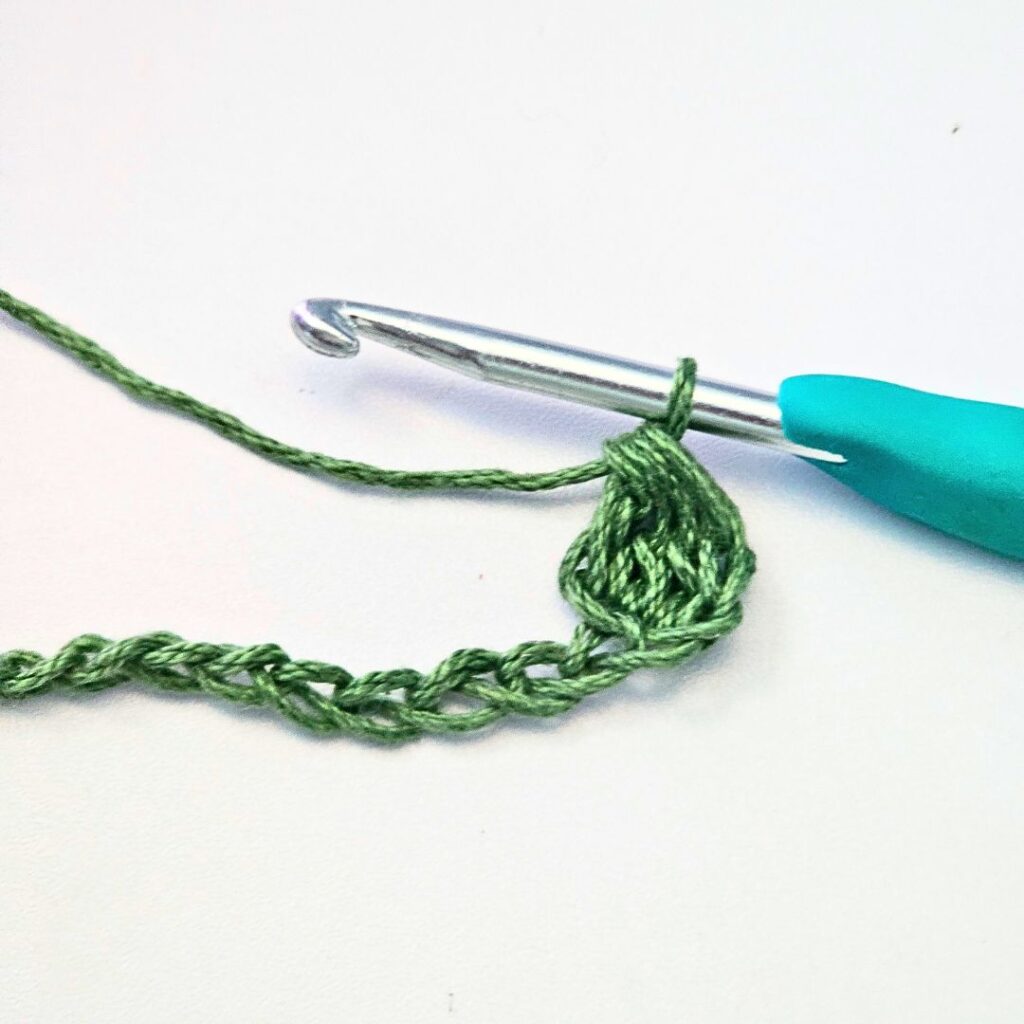
First 3 dc cl made.
Step 11: Ch 1, skip next chain space
Step 12: Yarn over, insert hook into next chain space.
Repeat steps 2 – 12 until the last 2 chains
Ch 1, skip next chain space
Rep steps 12, 2 – 10
This completes the first row.
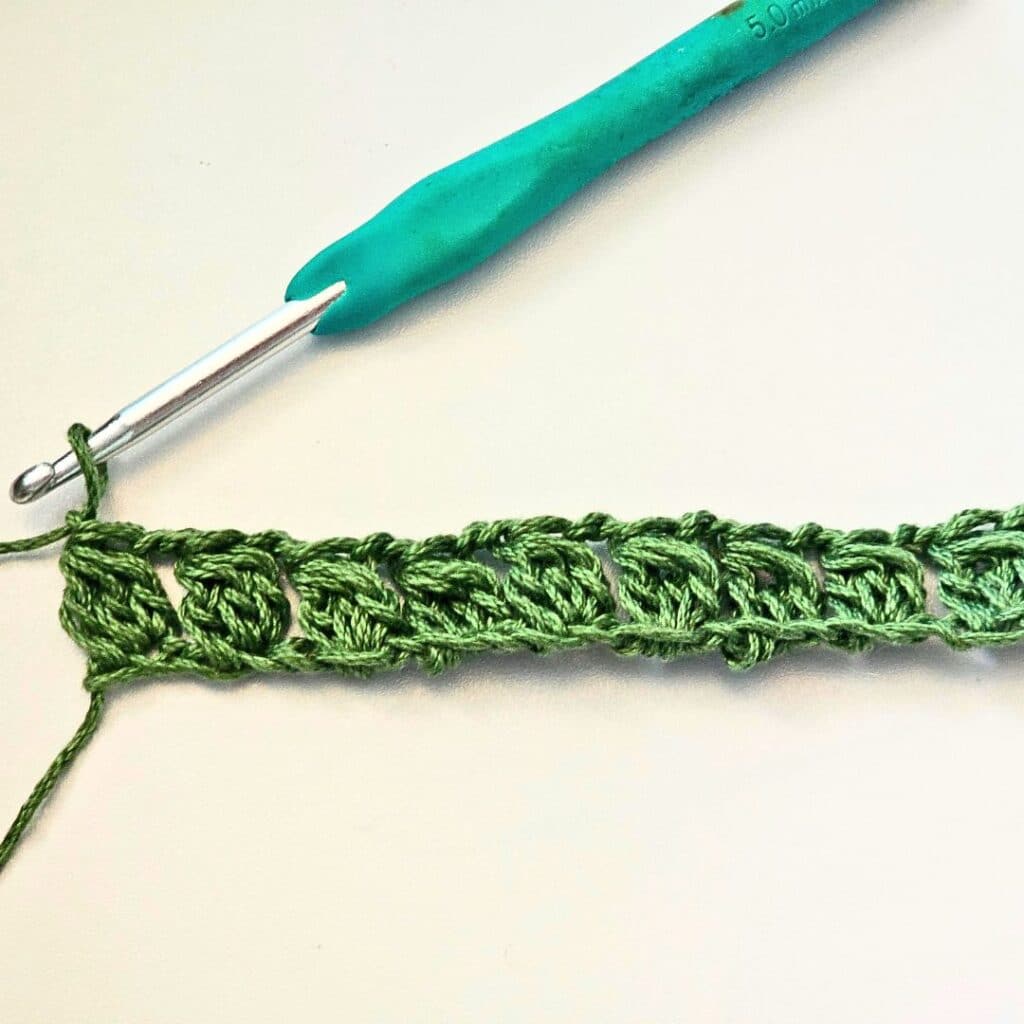
Row 2: ch 4 (Counts as dc + ch 1),
Step 1: Yarn over, insert hook in to the next ch sp
Step 2: Yarn over, bring up a loop (3 loops on hook)
Step 3: Yarn over, pull through 2 loops (2 loops on hook)
Step 4: Yarn over, insert hook into the same stitch
Step 5: Yarn over, bring up a loop (4 loops on hook)
Step 6: Yarn over, pull through 2 loops (3 loops on hook)
Step 7: Yarn over, insert hook into the same stitch
Step 8: Yarn over, bring up a loop (5 loops on hook)
Step 9: Yarn over, pull through 2 loops (4 loops on hook)
Step 10: Yarn over, pull through 4 loops (1 loop on hook)
Step 11: Ch 1
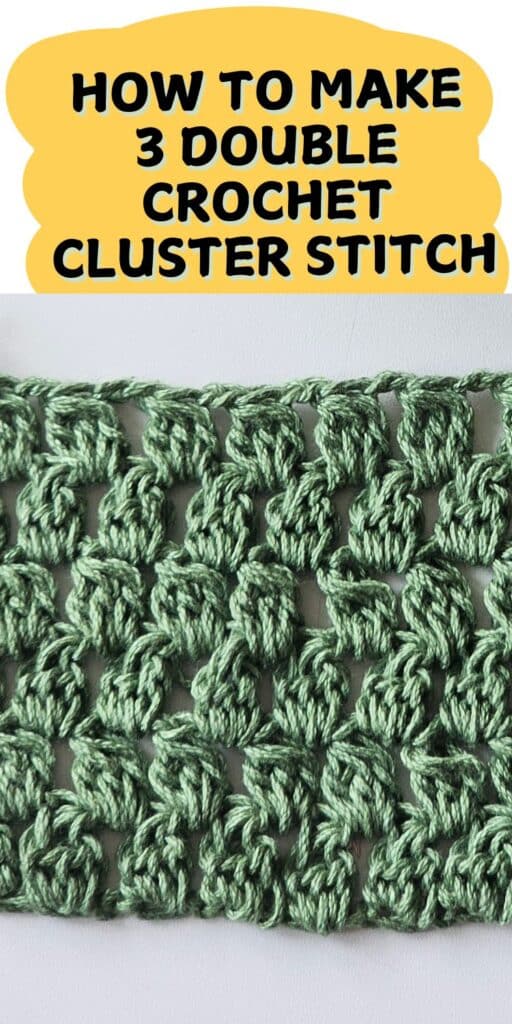
Repeat steps 1 – 11 until the end
Dc in the last stitch.
Repeat row 2 until you have your desired height.
Note, for a smooth edge, you can alternate placing a 3dc cl at the beginning and end of alternate and 1 dc at the start and end of the rows.
Pro Tips for Success
When working the 3 dc cl stitch, be sure to keep your yarn tension even so that each cluster looks the same size. If your clusters look too loose, tighten your loop size slightly and keep consistent hand movements. Always count the loops on your hook carefully when working the partial double crochets; at the end of each cluster you should have 4 loops before pulling through. Don’t forget the chain 1 between clusters because this creates the spacing for the next row. For neater edges, alternate placing a full cluster at the start and end of some rows with a single double crochet at the ends of others, which helps the sides look straighter.
Variations of Cluster Stitches
The 3 dc cl is just one of many cluster stitches you can learn. There are 2 dc clusters, 4 dc clusters, and even 5 or 6 dc clusters, each adding a different amount of height and density to the fabric. You can also explore puff stitches or bobble stitches which are often confused with clusters but are made differently. Experimenting with these variations can add variety to your crochet projects and allow you to create textures that range from delicate lace effects to chunky, bold stitches.
Different Ways to Use the 3 dc Cluster Stitch
This stitch can be used in so many crochet projects.
It’s especially popular in blankets and afghans because it creates a warm, cozy, and textured fabric.
It works beautifully in scarves and shawls, giving a nice balance of structure and drape.
Many designers also incorporate the 3 dc cluster into decorative panels of sweaters, dresses, and skirts for added texture.
You can also use it in smaller accents like pillow covers, coasters, and crochet squares that are later joined into larger projects.
How to Fix Common Mistakes
If your clusters are coming out uneven, it’s likely because of tension issues—make sure your loop sizes remain consistent.
Another common mistake is forgetting the chain 1 between clusters, which will throw off the placement of clusters in the following row, so keep an eye on your stitch count.
If your edges are wavy or uneven, remember that the turning chain counts as part of the stitch pattern and you should end each row with either a cluster or a double crochet in the last stitch to keep things aligned.
The 3 double crochet cluster stitch is a simple yet effective way to add texture and depth to your crochet projects.
With just a few practice rows you’ll have the rhythm memorized, and you’ll be able to use it in blankets, garments, accessories, and more.
About the Designer
Say Hi on Instagram and Subscribe To my email List for pattern discounts and freebies. For questions, send such to [email protected]. Read more about me here.
Hi, I’m Susanna!
I am Susanna, the designer and maker behind Fosbas Designs. Here, I share not only crochet designs but also the inspirations and process of each project. I am a happy mother of two handsome boys and a wife to my prince charming. These guys are…
More about meMore Like This
 Intermediate
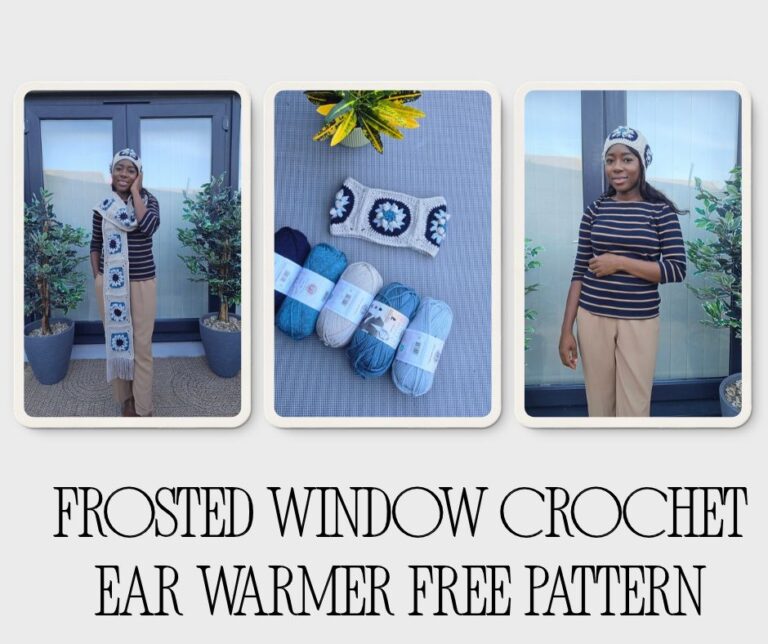
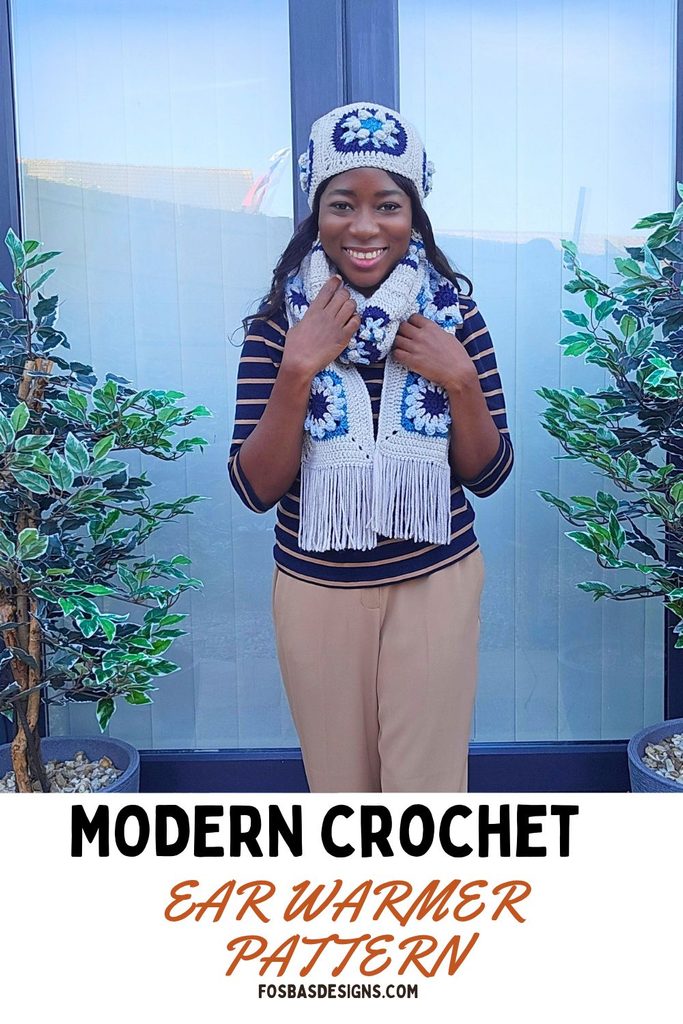
 Frosted Window Crochet Ear Warmer Free Pattern

 Beginner
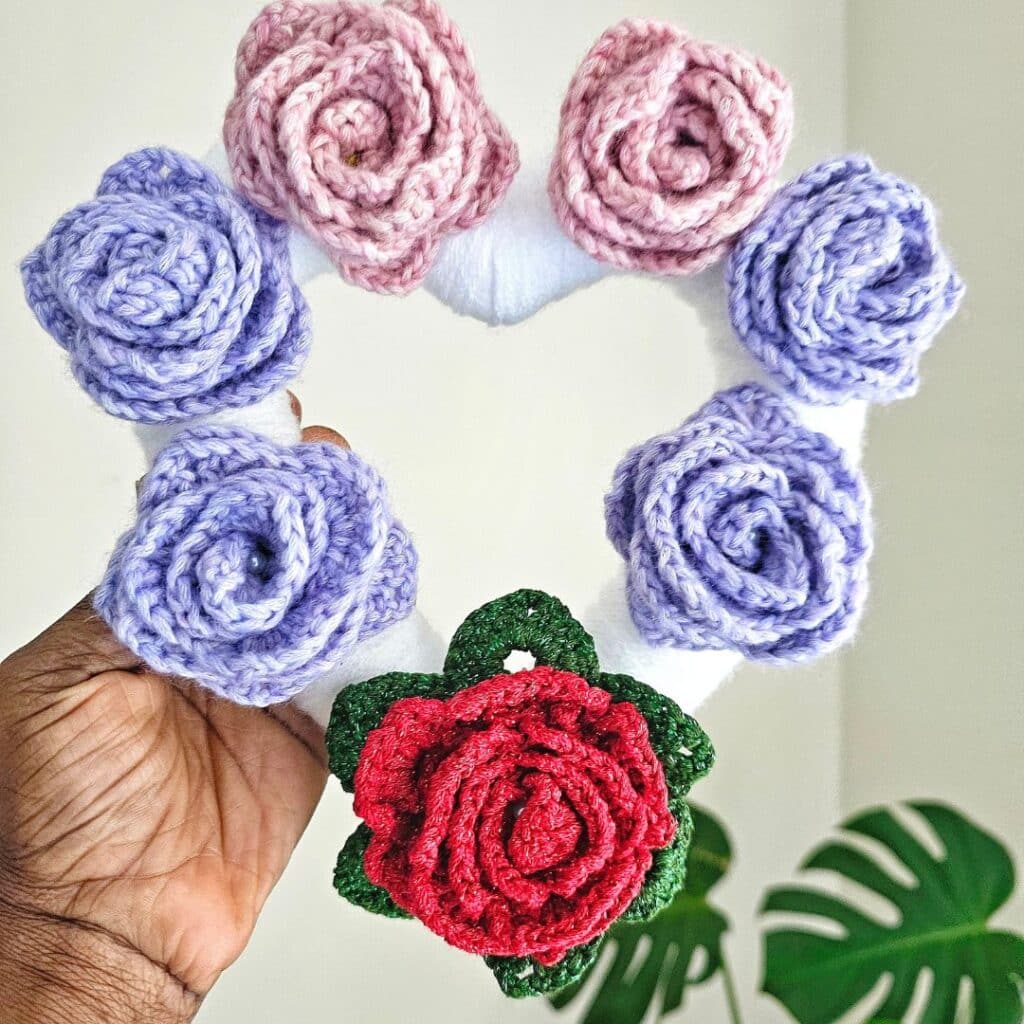
 Crochet Flower Wreath Free Pattern
How long does it take to complete a crochet Beanie?
 Intermediate
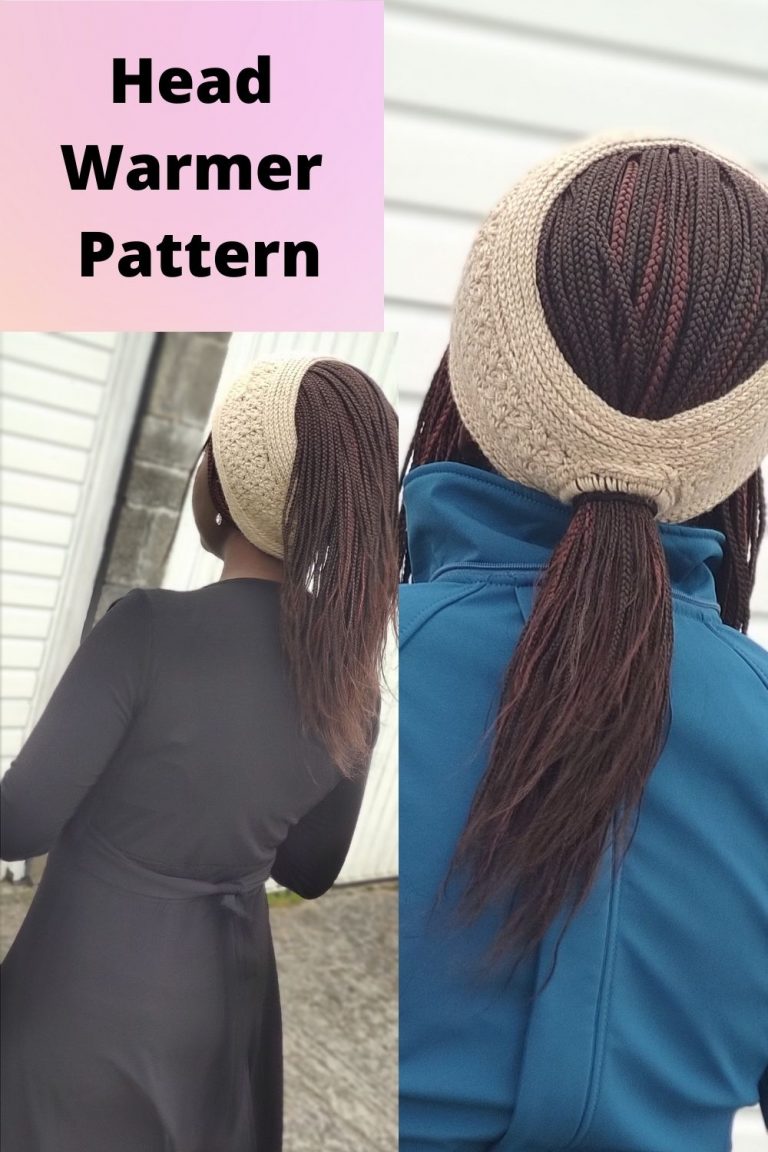
 Free crochet winter headband pattern
 Intermediate
 Crochet reversible granny stitch shawl
 Beginner